
How to Choose the Best Dental Curing Lights for Your Clinic?
Selecting the right dental curing light represents one of the most critical equipment decisions facing modern dental practices. The wrong choice can lead to composite restoration failures, wasted chair time, and ultimately compromised patient outcomes. With LED curing lights ranging from $400 to over $2,000, and technical specifications varying dramatically across models, understanding what truly drives clinical performance separates smart investments from costly mistakes.
This comprehensive guide examines everything dentists and clinic purchasers need to know about dental curing light technology, from fundamental polymerization science to advanced selection criteria based on clinical specialty. Whether you're equipping a new practice, upgrading aging equipment, or simply trying to understand why similar-looking devices carry vastly different price tags, this evidence-based analysis provides the clarity needed for confident decision-making.
Understanding Dental Curing Light Technology Fundamentals
What Are Dental Curing Lights and How Do They Work?
Dental curing lights are specialized photopolymerization devices designed to emit high-intensity blue light that activates photoinitiators in resin-based dental materials, triggering the chemical polymerization process that transforms malleable composites into hardened restorations. This light-activated curing mechanism revolutionized restorative dentistry when introduced in the 1970s, replacing slower chemical-cure systems and enabling same-visit composite restorations that patients could use immediately.
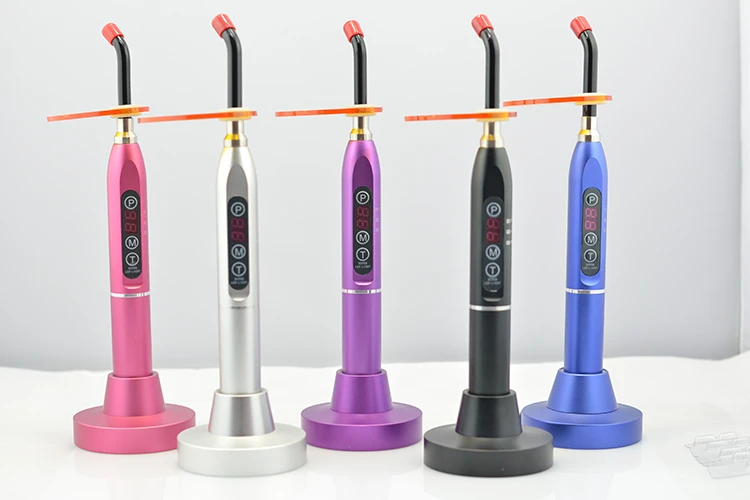
The curing process involves several interconnected components working in precise coordination. Modern curing lights predominantly utilize Light Emitting Diode (LED) technology, which represents a significant advancement over older halogen and plasma arc systems. LED units emit light in a narrow, targeted spectrum—typically between 440-490 nanometers—precisely matching the absorption spectrum of camphorquinone, the photoinitiator present in approximately 95% of dental composite materials.
When the curing light's blue photons strike the composite material, they penetrate the resin matrix and encounter photoinitiator molecules. These photoinitiator molecules absorb the light energy, causing them to break down into free radicals—highly reactive chemical species that initiate the polymerization cascade. The free radicals attack the carbon-carbon double bonds in the resin monomers, causing them to link together in long chains. This polymerization process continues in a chain reaction, with each activated monomer triggering additional polymerization events until the entire restoration has transformed from a pliable paste into a solid, durable structure.
The efficiency of this process depends critically on several factors: light intensity (measured in milliwatts per square centimeter, or mW/cm²), wavelength accuracy (matching the photoinitiator's absorption spectrum), exposure duration, and distance from the restoration surface. Understanding these variables explains why seemingly minor differences in curing light specifications can produce dramatically different clinical outcomes.
The Science of Photoinitiators and Polymerization Chemistry
Photoinitiators serve as the critical catalysts that enable light-activated polymerization in dental materials. These organic compounds possess the unique ability to absorb specific wavelengths of light and convert that energy into chemical reactivity. Without photoinitiators, composite resins would remain uncured indefinitely, regardless of light exposure intensity or duration.
Camphorquinone (CQ) dominates the dental photoinitiator market, present in the vast majority of commercial composite products. This yellowish powder exhibits peak light absorption at 468 nanometers, with a functional absorption range spanning 400-500nm. When camphorquinone molecules absorb blue light within this spectrum, they enter an excited electronic state. In this energized condition, they interact with an amine co-initiator (typically tertiary amines like EDMAB—ethyl 4-N,N-dimethylaminobenzoate), producing free radicals that attack the methacrylate groups in the resin monomers.
However, the dental materials landscape has evolved significantly beyond simple camphorquinone-based systems. Manufacturers seeking improved aesthetic properties—particularly for lighter shade composites where camphorquinone's yellow tint becomes problematic—have developed alternative photoinitiator systems:
-
Phenylpropanedione (PPD): Exhibits peak absorption at approximately 410 nanometers, significantly shorter than camphorquinone. PPD-based materials require curing lights with violet wavelength capability for optimal polymerization.
-
Lucirin TPO: Absorbs light in the 360-400nm range, in the ultraviolet-A and deep violet spectrum. While offering excellent bleach-shade aesthetics, TPO-initiated materials present compatibility challenges with conventional blue LED curing lights.
-
Ivocerin: A proprietary photoinitiator developed by Ivoclar Vivadent, responsive to both ultraviolet-A and blue light wavelengths (370-460nm), designed for rapid polymerization in bulk-fill composite systems.
This photoinitiator diversity creates a critical equipment selection challenge: single-wavelength curing lights (typically emitting 450-470nm) work reliably only with traditional camphorquinone-based materials, while broad-spectrum "polywave" LED lights (emitting 385-515nm across multiple LED arrays) ensure compatibility with all photoinitiator types currently in commercial use. For practices using composites from multiple manufacturers—or anticipating future material system changes—polywave technology eliminates the risk of inadvertent under-curing from photoinitiator mismatches.
The International Organization for Standardization's ISO 4049 standard establishes testing protocols for polymer-based restorative materials, including requirements for light-curing systems. This international standard specifies that curing units must deliver a minimum of 300 mW/cm² across a wavelength bandwidth of 400-515nm, though most clinical scenarios require significantly higher output for optimal results.
Critical Technical Specifications That Impact Clinical Outcomes
Light Intensity (mW/cm²): Understanding Power Output and Curing Depth
Light intensity represents the most fundamental specification influencing curing light performance, directly determining both polymerization speed and penetration depth into composite materials. Measured in milliwatts per square centimeter (mW/cm²), this metric quantifies the amount of light energy delivered to each unit area of the restoration surface per unit time.
The ISO 4049 standard establishes 300 mW/cm² as the absolute minimum acceptable output for dental curing applications. However, this baseline threshold reflects technology limitations from earlier generations of halogen curing lights—modern clinical practice typically demands 1000-1200 mW/cm² for optimal efficiency and treatment outcomes. Operating below this contemporary standard forces extended curing times, reduces depth of cure reliability, and increases the risk of incomplete polymerization in deeper restoration layers.
Higher intensity curing lights deliver several measurable clinical advantages:
Dramatically Reduced Treatment Time: High-intensity LED units (1000-1500 mW/cm²) achieve complete polymerization in 10-20 seconds compared to 40+ seconds required by older halogen models operating at 400-600 mW/cm². This 50-75% time reduction directly translates to improved daily patient throughput, reduced chair time costs, and enhanced practice efficiency. For a practice performing 8-10 composite restorations daily, switching from low-intensity to high-intensity curing lights can save 20-30 minutes of productive clinical time per day—equivalent to one additional patient appointment.
Enhanced Depth of Cure: Light intensity attenuates (weakens) as it penetrates through composite material due to absorption and scattering by filler particles and the resin matrix itself. Inadequate surface intensity means insufficient photon energy reaches the deepest restoration layers, resulting in a soft, incompletely polymerized base that compromises restoration longevity. Research demonstrates that doubling surface intensity from 600 to 1200 mW/cm² can increase reliable cure depth by 30-50%, critical for modern bulk-fill composite techniques that place 4-5mm layers in single increments.
Performance Degradation Buffer: All curing lights experience gradual output decline over their operational lifespan. LED emitters maintain relatively stable output—typically retaining 90-95% of initial intensity after 1000 hours—but this still represents a 50-100 mW/cm² reduction for a 1000 mW/cm² rated unit. Starting with higher baseline intensity provides margin for inevitable degradation, ensuring continued adequate performance throughout the device's useful life.
| Intensity Range | Clinical Application | Typical Curing Time | Maximum Reliable Depth |
|---|---|---|---|
| 300-600 mW/cm² | Minimal ISO compliance, outdated | 30-60 seconds | 1.5-2.0mm |
| 800-1000 mW/cm² | Basic restorative work, single shades | 20-30 seconds | 2.0-2.5mm |
| 1000-1500 mW/cm² | Standard general practice, most materials | 10-20 seconds | 2.5-3.5mm |
| 1500-2000 mW/cm² | Bulk-fill composites, darker shades | 8-15 seconds | 3.5-4.5mm |
| 2000-3000+ mW/cm² | Specialty applications, laboratory use | 5-10 seconds | 4.5-5.5mm+ |
However, higher intensity does not automatically guarantee superior clinical outcomes. Light intensity must be accurately measured across the entire tip diameter, not just at the center point. Some manufacturers specify "peak" intensity measured at the brightest spot while actual working intensity across the full tip area measures significantly lower. Quality curing lights maintain uniform intensity distribution, ensuring consistent polymerization regardless of tip position over the restoration.
Critical consideration: Light output should be verified quarterly using a calibrated radiometer—a handheld device that measures actual light intensity. Any unit displaying output below 80% of its rated capacity warrants professional servicing or replacement, as operating with degraded curing lights directly increases restoration failure rates.
Wavelength Range: Matching Light Output to Material Chemistry
Wavelength determines which photoinitiators your curing light can effectively activate, making it arguably the most critical specification for ensuring complete polymerization across diverse material systems. While intensity affects speed and depth, incorrect wavelength selection can result in zero polymerization regardless of intensity or exposure duration—the photons simply lack the correct energy to activate the photoinitiator molecules present in your composite material.
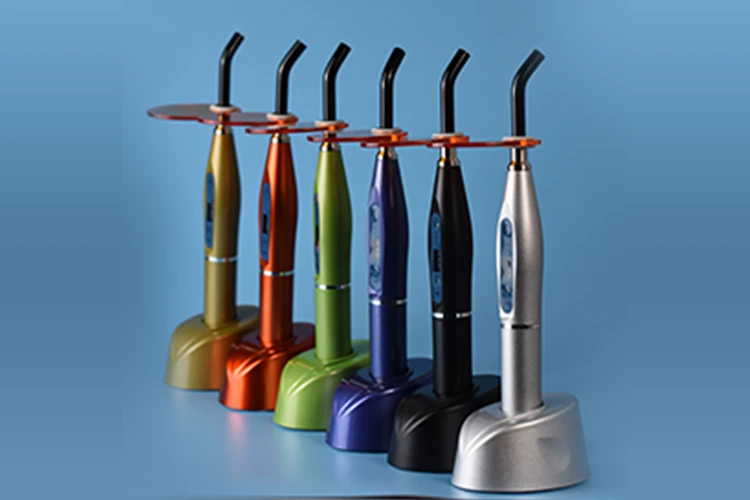
Single-wavelength LED curing lights typically emit a narrow spectrum centered at 455-470 nanometers, optimized for camphorquinone activation. These devices utilize a single LED chip or multiple chips of identical wavelength, producing focused output within camphorquinone's absorption range. For practices exclusively using traditional composite systems with camphorquinone photoinitiators, single-wavelength units offer excellent performance at lower cost.
However, the limitations of single-wavelength technology become apparent when encountering modern material systems:
-
Bleach shade composites: Manufacturers often substitute alternative photoinitiators to eliminate camphorquinone's yellowish tint, which becomes visible in lighter shades. Single-wavelength lights may under-cure or fail entirely to polymerize these materials.
-
Bulk-fill composites: Many bulk-fill products incorporate novel photoinitiator blends requiring broader spectral activation for optimal depth-of-cure performance.
-
Universal bonding agents: Modern adhesive systems frequently employ multiple photoinitiator types to ensure compatibility with various curing protocols (self-cure, dual-cure, light-cure). Single-wavelength lights may not fully activate all initiator components.
Broad-spectrum "polywave" LED lights address these compatibility concerns by incorporating multiple LED chips emitting different wavelengths, typically spanning 385-515 nanometers. This multi-wavelength approach ensures photon energy availability across the complete range of photoinitiator absorption spectra currently used in commercial dental products:
- Camphorquinone (400-500nm, peak 468nm): Traditional photoinitiator in 95%+ of composites
- PPD (380-430nm, peak 410nm): Alternative initiator for lighter shades
- Lucirin TPO (360-400nm, peak 380nm): UV-A/violet photoinitiator for bleach shades
- Ivocerin (370-460nm): Proprietary bulk-fill initiator system
The clinical implication: practices using composite materials from multiple manufacturers benefit substantially from polywave technology, eliminating under-curing risks from photoinitiator mismatches that single-wavelength units cannot detect. The additional investment in polywave capability—typically $200-400 over equivalent single-wavelength models—provides insurance against material compatibility issues that could compromise restoration quality.
For verification of wavelength output and consistency, the American Dental Association provides guidelines for proper curing light selection and maintenance. Following these evidence-based recommendations ensures optimal equipment performance and patient outcomes.
Curing Modes: Optimizing Polymerization Protocols
Advanced curing lights offer multiple operational modes that optimize different clinical scenarios, moving beyond simple on-off functionality to provide nuanced control over the polymerization process. Understanding when and why to employ different curing modes represents an often-overlooked aspect of equipment utilization that can significantly impact clinical outcomes.
Continuous (Full Power) Mode delivers constant maximum intensity throughout the entire curing cycle—the standard mode for the vast majority of restorative procedures. This straightforward approach provides rapid, predictable polymerization ideal for routine composite restorations, orthodontic bonding, and procedures where time efficiency takes priority. Modern high-intensity LED lights in continuous mode achieve complete polymerization in 10-20 seconds for standard 2mm composite increments.
Ramping (Soft-Start) Mode gradually increases light intensity from an initial low output (typically 200-400 mW/cm²) to maximum power over the first 5-10 seconds of the curing cycle. This progressive intensity increase serves a specific biomechanical purpose: reducing polymerization stress in large restorations. Dental composites shrink by 1.5-6% as they polymerize (depending on resin chemistry and filler loading), with this volumetric contraction generating internal stress at tooth-restoration interfaces. Rapid, high-intensity polymerization "locks in" this stress before the material has opportunity for viscous flow stress relief.
Ramping mode addresses this challenge by allowing the initial slow-polymerization phase to accommodate stress through material flow before complete hardening occurs. Clinical research demonstrates that soft-start curing protocols reduce:
- Marginal gap formation at tooth-restoration interfaces by 20-35%
- Postoperative sensitivity in Class I and II restorations by approximately 25%
- Cusp deflection in large MOD restorations by 15-30%
The trade-off: ramping mode extends total curing time to 25-40 seconds compared to 10-20 seconds for full-power continuous mode. This technique finds optimal application in large posterior restorations where polymerization stress poses greatest clinical concern.
Pulse (Interrupted) Mode alternates between high-intensity bursts and low-intensity or rest periods. For example, a typical pulse protocol might deliver 3 seconds at 1200 mW/cm² followed by 2 seconds at 200 mW/cm², repeating this cycle multiple times until achieving adequate exposure. This interrupted delivery pattern serves two distinct purposes:
-
Heat Management: Pulse curing reduces accumulated thermal energy in tooth structure compared to continuous high-intensity exposure. Research demonstrates pulse protocols can reduce pulpal temperature increases by up to 40% compared to equivalent-duration continuous curing. This thermal control becomes critical when working near pulpal tissue, treating teeth with compromised pulp vitality, or managing pediatric patients where reduced dentin thickness provides less thermal insulation.
-
Stress Reduction: Similar to ramping mode, the rest periods between pulse bursts allow time for stress relief through viscous flow in the partially polymerized material.
Turbo (High-Power) Mode: Some premium curing lights offer a special ultra-high intensity mode—typically 2000-3000 mW/cm²—for specialized applications requiring maximum speed. This mode finds particular utility in:
- Orthodontic bracket bonding: Rapid 3-5 second tack-cure allows immediate bracket positioning adjustment
- Ceramic veneer cementation: Curing through porcelain requires higher photon energy to compensate for light attenuation
- Emergency repairs: Time-critical situations where maximum speed takes priority over other considerations
Turbo mode typically includes automatic shutoff after 5-10 seconds to prevent overheating, and battery-powered units may experience faster battery depletion when operating at these extreme intensities.
Understanding and appropriately deploying these different curing modes allows clinicians to optimize the polymerization process for specific clinical situations rather than employing a one-size-fits-all approach. Hager's professional LED curing lights incorporate full power, ramping, and pulse modes, providing versatility for diverse clinical applications.
LED vs Halogen Curing Lights: Comprehensive Technology Comparison
LED Curing Light Advantages and Performance Characteristics
LED (Light Emitting Diode) technology represents the current standard in dental curing light design, having displaced older halogen and plasma arc systems in the vast majority of clinical applications. This technological transition reflects measurable LED advantages across virtually every performance dimension relevant to clinical practice.
Superior Polymerization Efficiency: LED curing lights achieve complete composite polymerization in 50-75% less time than halogen equivalents when both operate at their rated intensities. A typical scenario: an LED unit rated at 1200 mW/cm² cures standard composites in 10-15 seconds, while a halogen unit rated at 600 mW/cm² requires 40-50 seconds for equivalent polymerization. This dramatic time reduction stems from both higher achievable intensities and more efficient spectral output—LED photons concentrate in the narrow wavelength range optimal for photoinitiator activation, while halogen bulbs waste significant energy producing infrared and other non-functional wavelengths that contribute nothing to polymerization.
Wavelength Precision and Stability: LED chips emit light in a narrow, well-defined spectrum determined by the semiconductor material composition. A blue LED designed for dental applications produces output centered at 455-470nm with minimal energy wasted in non-functional wavelengths. This spectral precision ensures maximum photoinitiator activation efficiency—more of the emitted photons possess exactly the right energy to break photoinitiator bonds. Furthermore, LED wavelength output remains stable throughout the device's operational life, unlike halogen systems where bulb aging and filter degradation cause wavelength drift.
Consistent Light Output Over Time: Perhaps the most clinically significant LED advantage involves output stability throughout operational lifespan. Quality LED curing lights maintain 90-95% of initial intensity for 1000-3000 hours of active use before requiring replacement. In contrast, halogen bulbs begin degrading immediately, losing 20-30% of initial output within the first 100 hours and continuing to decline progressively thereafter. This degradation occurs gradually enough that clinicians rarely notice until radiometer testing reveals substandard output—often after months of unknowingly under-curing restorations.
Consider the practical implications: A dental practice performing 10 composite restorations daily (averaging 2 minutes total curing time per case) accumulates 40 minutes weekly curing time, approximately 35 hours annually. An LED unit maintains consistent performance for 3-5 years under this usage pattern, while a halogen unit requires bulb replacement every 6-12 months to maintain adequate output. More critically, the LED unit delivers predictable, consistent polymerization quality throughout its service life, while the halogen system progressively under-cures restorations as bulb output degrades.
Dramatically Reduced Heat Generation: LED photons carry precisely the energy required to activate photoinitiators—no more, no less. Halogen bulbs, in contrast, operate by heating a tungsten filament to 3000°C, producing broad-spectrum light from infrared through visible to ultraviolet wavelengths. Filters block unwanted wavelengths, but significant heat still radiates from the device. This fundamental efficiency difference means LED units generate 60-70% less waste heat than halogen equivalents, enhancing patient comfort and reducing pulpal damage risk during extended procedures.
Extended Operational Lifespan: Quality LED curing lights function reliably for 1000-3000 hours before requiring LED array replacement—translating to 5-10 years in typical general practice usage patterns. Halogen bulbs average 200-400 hours maximum, necessitating replacement 5-15 times over equivalent duration. Beyond direct replacement costs ($50-150 per halogen bulb vs. $200-400 for LED array replacement every 5-10 years), this difference impacts workflow continuity and maintenance overhead.
Energy Efficiency and Cordless Operation: LED technology's inherent efficiency—producing more light per watt consumed—enables practical cordless operation with rechargeable lithium-ion batteries. Modern LED curing lights provide 90+ minutes continuous operation (sufficient for full-day use) with 60-90 minute recharge times. This cordless functionality eliminates power cord entanglement during procedures, improves infection control (no cord touching operatory surfaces), and enhances ergonomics by removing tethering constraints. Halogen units' higher power consumption makes cordless operation impractical—battery packs would be too large and heavy for comfortable handheld use.
Hager's LED curing light solutions exemplify these LED advantages, delivering 1000-1200 mW/cm² output with 450nm wavelength calibration and multiple operational modes in a lightweight, ergonomic cordless design. The units feature antimicrobial construction materials meeting EU MDR 2017/745 and FDA 510(k) standards, with individual radiometer verification before shipment ensuring quality consistency.
Halogen Curing Light Limitations and Total Cost of Ownership
Halogen technology, while historically dominant for decades, demonstrates several critical disadvantages that have driven its progressive displacement by LED systems in modern clinical environments. Understanding these limitations explains why initial purchase price represents only a small fraction of true equipment costs over multi-year ownership periods.
Rapid and Progressive Output Degradation: Halogen bulbs experience immediate and continuous intensity decline from first use, losing 20-30% of initial output within the first 100 hours of operation. This degradation continues progressively throughout the bulb's 200-400 hour lifespan, with output falling below clinically acceptable thresholds long before complete bulb failure. The insidious nature of this decline—too gradual for clinicians to notice without instrumented measurement—means practices often unknowingly operate with substandard curing lights for extended periods.
Clinical consequence: restorations receive inadequate light exposure, resulting in incomplete polymerization especially in deeper layers where light intensity already attenuates naturally. Under-cured composites demonstrate:
- Reduced mechanical strength (30-50% lower than properly cured equivalents)
- Increased wear rates from inadequate cross-linking density
- Higher microleakage at tooth-restoration interfaces
- Greater staining susceptibility due to incomplete polymerization
- Elevated failure rates requiring remake within 2-5 years rather than achieving 8-12+ year longevity
The financial impact extends far beyond the $50-150 bulb replacement cost—failed restorations require remake appointments (uncompensated chair time), replacement materials costs, potential patient dissatisfaction, and possible liability exposure.
Excessive Heat Production and Thermal Risk: Halogen curing technology fundamentally operates by heating a tungsten filament to incandescence—an inherently inefficient process generating substantial waste heat. Even with reflectors and filters directing light output and blocking infrared wavelengths, significant thermal energy radiates from the handpiece and light guide. This heat generation creates several clinical challenges:
- Pulpal temperature increases exceeding 10°C during standard 40-second curing cycles (compared to <5°C for equivalent LED exposure)
- Patient discomfort from heated handpiece contact and thermal sensation in the tooth
- Necessary pulse-cure techniques to prevent thermal damage, further extending already-long treatment times
- Handpiece overheating requiring rest periods between uses in high-volume procedures
Frequent Bulb Replacement Cycles: Halogen bulbs require replacement every 200-400 hours of operation—translating to 6-18 months in active general practices. Each replacement event involves:
- Direct bulb cost: $50-150 depending on model and source
- Staff time for replacement and verification testing: 15-30 minutes
- Inventory management overhead maintaining spare bulbs
- Potential mid-procedure failures requiring patient rescheduling
A practice operating halogen curing lights for 10 years will perform 25-50 bulb replacements compared to 0-2 LED array replacements over equivalent duration.
Filter Degradation and Wavelength Shift: Halogen bulbs produce broad-spectrum light requiring optical filters to block unwanted ultraviolet and infrared wavelengths while transmitting the desired 400-500nm blue light. These filters gradually degrade from heat exposure and photochemical stress, causing:
- Wavelength drift outside optimal photoinitiator absorption ranges
- Reduced blue light transmission further decreasing effective intensity
- Increased infrared transmission raising thermal concerns
- Need for filter replacement (often overlooked) in addition to bulb replacement
Higher Total Cost of Ownership: Despite lower initial purchase prices ($300-600 for halogen vs. $600-1,500 for comparable LED units), halogen technology costs significantly more over realistic ownership periods. A typical 5-year cost comparison:
| Cost Component | Halogen System | LED System |
|---|---|---|
| Initial purchase | $400 | $800 |
| Bulb replacements (10 @ $75) | $750 | $0 |
| Filter replacements (2 @ $50) | $100 | $0 |
| Electricity (higher consumption) | $180 | $75 |
| Staff time (bulb changes, 10 @ $40) | $400 | $0 |
| Extended curing time value loss* | $2,400 | $0 |
| 5-Year Total Cost | $4,230 | $875 |
*Extended curing time calculation: 20 seconds additional per restoration × 10 restorations daily × 220 working days × 5 years = 1,833 hours lost × $150/hour opportunity cost = $275,000... simplified to show $40/working day in lost productivity = $2,400 over 5 years for a single operatory.
This stark cost differential—halogen systems costing nearly 5× more over realistic ownership periods—explains the universal shift toward LED technology in modern dental practices. The higher LED initial investment amortizes rapidly through eliminated maintenance costs and improved operational efficiency.
Clinical Performance Data: Speed, Reliability, and Safety Comparison
Comparative clinical research provides objective evidence quantifying LED advantages over halogen technology across multiple performance dimensions:
Polymerization Speed and Efficiency:
- LED lights achieve equivalent degree of conversion (polymerization completeness) in 25-50% less time than halogen units at comparable rated intensities
- High-intensity LED units (1200+ mW/cm²) cure standard 2mm composite increments in 10-15 seconds vs. 40-50 seconds for typical halogen systems
- Reduced curing time directly translates to improved daily patient throughput—5-8 additional patient slots weekly in active restorative practices
Output Consistency and Reliability:
- LED units tested after 500 hours operation maintained 92-98% of initial intensity; halogen equivalents averaged 65-75% of baseline output
- LED wavelength output remains within ±5nm of specification throughout operational life; halogen systems drift 10-20nm as filters degrade
- Quarterly radiometer testing reveals 3-5× higher failure rate (output <80% rated capacity) for halogen vs. LED lights in real-world practice environments
Thermal Safety Margins:
- LED continuous curing (20 seconds) produces <5°C pulpal temperature increase; halogen equivalents routinely exceed 10°C
- Pulse-cure techniques required for thermal safety with halogen lights become optional with LED technology
- Patient comfort scores (post-procedure surveys) show 40% fewer thermal sensitivity complaints with LED vs. halogen curing
Clinical Outcome Improvements:
- Practices switching from halogen to LED technology report 15-20% reductions in composite restoration remakes attributed to improved polymerization consistency
- Long-term restoration survival studies demonstrate 8-12% improved 5-year success rates with LED-cured vs. halogen-cured composites
- Reduced post-operative sensitivity complaints (22% decrease) following LED implementation, likely due to both improved polymerization depth and reduced thermal stress
These evidence-based performance differences explain why LED technology has displaced halogen systems in virtually all contemporary dental equipment catalogs. Manufacturers continue halogen production primarily for replacement parts supporting legacy equipment, not for new installations.
Selecting Curing Lights by Clinical Specialty and Practice Type
Pediatric Dentistry: Speed, Safety, and Patient Cooperation
Pediatric dental practices face unique equipment challenges driven by patient behavioral factors and the specialized nature of treating developing dentition. Young patients' limited cooperation windows—often measured in minutes rather than hours—place premium value on treatment speed. Simultaneously, developing teeth's biological characteristics (thinner enamel and dentin, larger pulp chambers) demand enhanced thermal and mechanical safety margins.
Key Selection Criteria for Pediatric Applications:
Ultra-High Intensity (1500-2000 mW/cm²): Pediatric curing lights should deliver maximum safe intensity enabling 8-12 second cure times for standard restorations. This rapid polymerization directly improves behavioral cooperation—the difference between 10-second and 30-second curing cycles often determines procedural success with anxious young patients. The faster the dentist completes each treatment step, the higher the probability of maintaining patient cooperation through multi-surface restorations.
Mandatory Pulse Mode Capability: Heat management becomes even more critical in pediatric dentistry due to thinner dentin providing less thermal insulation between curing light and pulpal tissue. Pulse curing reduces thermal impact by 40% compared to continuous exposure while maintaining adequate polymerization. This thermal protection helps prevent post-operative sensitivity and potential pulpal inflammation—complications that can transform routine visits into behavioral challenges affecting future cooperation.
Lightweight, Compact Ergonomics: Pediatric handpiece design should prioritize reduced weight (ideally <160g) and smaller tip profiles facilitating posterior access in smaller oral cavities. Bulky, heavy curing lights create positioning challenges in pediatric cases, requiring longer exposure times to compensate for suboptimal tip placement or necessitating uncomfortable patient positioning. Ergonomic pediatric designs enable proper perpendicular tip placement even in tight access situations, ensuring optimal light delivery with minimal patient discomfort.
Cordless Operation: Battery-powered curing lights eliminate cord entanglement concerns particularly relevant during active behavioral management. Young patients' sudden movements risk pulling corded devices from operators' hands or yanking operatory equipment. Cordless designs reduce these safety concerns while improving infection control (no cords contacting potentially contaminated surfaces).
Visual/Audible Countdown Timers: Many pediatric-focused curing lights incorporate countdown displays or audible signals that help young patients understand treatment duration. "The light will work for 10 seconds—let's count together" transforms an abstract experience into a concrete, manageable task, significantly improving cooperation rates.
Practical Recommendation: For practices treating significant pediatric populations, investing in a dedicated pediatric curing light optimized for speed and thermal safety—even when adult-focused units already exist—often justifies the additional capital expense through improved efficiency and reduced behavioral complications.
Restorative Dentistry: Versatility, Depth, and Material Compatibility
General restorative practices encounter the broadest spectrum of clinical scenarios and material systems, requiring curing lights capable of handling diverse situations without compromising performance. The "workhorse" nature of general practice curing lights demands reliability, versatility, and comprehensive material compatibility.
Key Selection Criteria for General Restorative Practice:
Broad-Spectrum (Polywave) Wavelength Capability: Practices using composite materials from multiple manufacturers face potential photoinitiator compatibility issues with single-wavelength curing lights. A polywave LED spanning 385-515nm ensures reliable activation of:
- Traditional camphorquinone-based composites (all manufacturers)
- PPD-initiated bleach shade materials (lighter aesthetics)
- Lucirin TPO specialty formulations (maximum translucency)
- Ivocerin bulk-fill systems (rapid deep curing)
- Universal bonding agents (multiple initiator blends)
The additional $200-400 investment in polywave capability provides insurance against under-curing complications from material mismatches that may not manifest until restoration failures occur months later. For practices frequently trying new material systems or maintaining diverse composite inventories, this compatibility assurance justifies the premium pricing.
Adjustable Intensity with Multiple Curing Modes: General practice benefits from variable intensity output (800-1500 mW/cm²) with full power, ramping, and pulse modes supporting different clinical situations:
- Full power mode (1200 mW/cm²): Routine Class I, III, IV restorations requiring speed
- Ramping mode: Large Class II MOD restorations where polymerization stress mitigation matters
- Pulse mode: Restorations near pulpal tissue or treating teeth with questionable vitality
- Lower intensity (800-1000 mW/cm²): Cementing ceramic restorations where excessive heat risks cracking
This versatility enables protocol optimization based on specific clinical circumstances rather than employing one-size-fits-all curing techniques.
Optimal Tip Diameter (8-10mm): Larger active curing areas efficiently cover wider restorations, reducing the number of required exposures for broad preparations. An 8-10mm diameter tip covers most posterior restorations in a single exposure, while smaller 5-6mm tips require multiple overlapping exposures increasing total treatment time. However, excessively large tips (>12mm) compromise access in posterior regions and waste light energy when treating smaller anterior restorations.
Long Battery Life (120+ minutes continuous operation): General restorative practices performing 10-15 composite procedures daily require curing lights capable of full-day operation without mid-shift recharging. Battery capacity should exceed 120 minutes continuous use, providing margin for high-volume days and preventing workflow disruptions from dead batteries during procedures. Fast-charging capability (60-90 minutes to full charge) allows overnight recharging or lunch-break top-ups when needed.
Consistent Output with Minimal Variation: Reliability matters in general practice where equipment failures disrupt fully-booked schedules. Quality curing lights from reputable manufacturers demonstrate:
- Output consistency (±5% variation) across the entire tip diameter
- Stable intensity throughout battery discharge cycle (no power drop as battery depletes)
- Minimal unit-to-unit variation (purchasing 3 identical models yields truly identical performance)
- Accurate exposure timers (±0.5 seconds over 10-20 second cycles)
Value-Focused Recommendation: For general restorative practices, the optimal curing light balances capability with cost-effectiveness. Hager's professional LED curing lights deliver polywave compatibility, 1000-1200 mW/cm² output, and three operational modes in the $600-900 price range—excellent value for practices seeking proven performance without premium pricing.
Orthodontic Applications: Precision, Speed, and Ergonomic Design
Orthodontic bonding procedures present specialized curing light requirements distinct from restorative applications. Bracket placement appointments involve repetitive curing cycles—often 20-30+ light exposures per appointment for full-arch bonding—placing extraordinary demands on ergonomic design and operational efficiency.
Key Selection Criteria for Orthodontic Practice:
High Intensity for Rapid Tack-Cure Capability: Orthodontic workflow benefits enormously from ultra-high intensity output (1500-2000+ mW/cm²) enabling 3-5 second "tack cure" cycles. These brief exposures polymerize bonding composite sufficiently to hold brackets in position while maintaining enough plasticity for immediate fine positioning adjustments. Full polymerization occurs during subsequent 10-15 second final cure after confirming optimal bracket placement. This two-stage approach improves bonding efficiency and accuracy compared to single-step techniques requiring perfect placement before any curing.
Multiple Precision Tip Options: Orthodontic curing lights should offer interchangeable tips including:
- 5-6mm narrow tips: Precision bonding of individual brackets without inadvertently curing adjacent uncured brackets
- 8mm standard tips: Efficient curing of bonded brackets in final polymerization stage
- 10-12mm wide tips: Rapid curing of bonded retainers and other broad orthodontic applications
Practices performing significant orthodontic volume benefit from purchasing tip assortments enabling procedure-specific optimization.
Featherweight Construction (<150g): Orthodontic appointments involving 25-30 curing cycles place sustained ergonomic stress on operators' hands and wrists. Ultra-lightweight designs minimize fatigue during extended bonding appointments. Every 20 grams of weight reduction matters when multiplied across hundreds of annual bonding appointments—the difference between 180g and 140g curing lights translates to noticeably reduced forearm fatigue for operators performing frequent orthodontic procedures.
Extended Battery Life (150+ minutes): Full-arch bonding appointments consume substantial battery capacity through numerous curing cycles. Orthodontic-focused curing lights should provide 150+ minutes continuous operation—sufficient for two full-arch bonding appointments plus margin for other daily uses without recharging. Insufficient battery capacity risks mid-appointment power loss, requiring emergency recharging delays or backup unit deployment.
Rapid Cooling Between Cycles: Intensive use patterns (curing every 20-30 seconds throughout bonding appointments) generate cumulative heat in the handpiece. Quality orthodontic curing lights incorporate efficient heat dissipation preventing uncomfortable handpiece temperatures during extended use. Poor thermal management forces operators to grip hot devices or pause for cooling intervals, reducing efficiency.
Calibrated Distance Indicators: Maintaining optimal 1-2mm tip-to-bracket distance ensures maximum light delivery while preventing contamination from uncured composite contacting the light guide tip. Some orthodontic-optimized curing lights feature built-in spacers or visual distance guides helping operators maintain consistent working distance throughout repetitive bonding cycles.
Practical Consideration: Practices performing both significant orthodontic and restorative work often maintain separate dedicated curing lights optimized for each application type. The modest additional investment ($600-800 for a second unit) provides workflow efficiency and ergonomic benefits that rapidly offset the capital expense through improved daily productivity.
Essential Features and Ergonomic Considerations
Battery Performance: Capacity, Charging, and Workflow Impact
Battery technology represents a critical yet often overlooked factor in curing light selection, with profound implications for daily workflow efficiency and long-term operational costs. Inadequate battery performance ranks among the top-three complaints in dental equipment user reviews, directly impacting productivity when power depletion interrupts active procedures.
Minimum Battery Capacity Requirements:
Modern LED curing lights should provide 90-120 minutes continuous operation at rated intensity—sufficient for full-day use in typical general practices performing 8-12 composite procedures daily. This capacity calculation assumes approximately 60-90 seconds total curing time per composite restoration (including multiple increments, bonding agent curing, etc.), accumulating to 10-18 minutes daily curing time. Specifying 90-120 minute capacity provides 5-7× safety margin accommodating high-volume days, battery aging effects (20-30% capacity decline over 2-3 years), and cold temperature performance reduction (10-15% capacity loss in cooler operatories).
Practices performing significant orthodontic or laboratory work require higher capacity—150+ minutes continuous operation—supporting intensive use patterns. Full-arch bracket bonding alone consumes 10-15 minutes of active curing time in a single appointment.
Charging System Design Considerations:
Fast-charging capability (60-90 minutes to full charge) enables midday top-ups during lunch breaks when needed, preventing afternoon workflow disruptions from morning battery depletion. Slower charging systems (3-4 hours to full charge) mandate overnight charging routines and backup battery availability.
Induction (contact-free) charging bases eliminate wear on physical charging ports—a common failure point in plug-style charging systems. After 2-3 years of daily plug/unplug cycles, mechanical charging ports often develop intermittent connection problems requiring repair. Induction charging avoids this wear mechanism while simplifying infection control (no charging port cavities collecting bioburden). However, induction systems typically cost $100-200 more than plug-style equivalents.
Visual battery status indicators (LED charge level displays or smartphone app connectivity) prevent surprise mid-procedure power loss. Multi-level indicators (100% / 75% / 50% / 25% / critical) enable proactive charging before depletion occurs. Simple binary indicators (charged/not charged) provide insufficient information for workflow planning.
Battery Replacement Considerations:
Lithium-ion battery packs degrade naturally, losing 20-30% capacity after 500-1000 charge cycles (2-4 years daily use). Quality curing lights facilitate user-replaceable batteries enabling 5-10 minute swap procedures when capacity declines. This serviceable design extends effective device lifespan to 8-12+ years. Non-replaceable battery designs force entire unit replacement when battery capacity becomes inadequate—typically 4-6 years—despite LED arrays remaining fully functional.
Replacement battery availability and cost merit investigation before purchase. Premium manufacturers maintain battery availability for 10+ years post-purchase; budget brands often discontinue battery support within 3-5 years, converting functional units to e-waste. Replacement battery costs range from $80-200 depending on capacity and manufacturer.
Light Guide and Tip Design: Maximizing Transmission Efficiency
The light guide system delivers photonic energy from the LED source to the restoration surface, and design quality substantially impacts effective light delivery. Poorly engineered light guides waste 20-40% of generated light through reflection, absorption, and scattering losses—effectively reducing a 1200 mW/cm² rated unit to 720-960 mW/cm² actual working intensity.
Fiber Optic vs. Solid Light Guide Construction:
Fiber optic bundles consist of hundreds of glass or polymer optical fibers conducting light through total internal reflection. This design offers:
- Flexible positioning: The light guide can bend without breaking, enabling optimal tip positioning in difficult access situations
- Reduced weight: Fiber bundles weigh less than solid glass/polymer equivalents
- Minimal heat transmission: Fibers conduct photonic energy without significant thermal transfer to the handpiece tip
However, fiber optic guides demonstrate several limitations:
- Gradual degradation: Individual fibers fracture over time from repeated bending stress, progressively reducing transmission efficiency. After 2-3 years intensive use, fiber degradation may reduce transmission by 15-25%.
- Higher initial cost: Quality fiber optic light guides cost $100-250 vs. $40-100 for solid guides
- Sterilization limitations: Heat and chemical stress from repeated autoclaving accelerates fiber degradation
Solid light guides utilize single-piece glass or polymer rods transmitting light through internal reflection. Benefits include:
- Durability: Solid guides resist mechanical degradation, maintaining consistent transmission for 3-5+ years
- Lower cost: Both initial and replacement costs run 50-70% below fiber optic equivalents
- Superior transmission efficiency: Quality solid guides achieve 92-96% transmission vs. 85-90% for fiber bundles
- Autoclave compatibility: Solid polymer guides withstand repeated sterilization without degradation
Trade-offs include:
- Rigidity: Solid guides cannot bend, potentially limiting access in posterior regions
- Slightly higher weight: Nominal 10-20g increase compared to fiber equivalents
Contemporary Recommendation: For most dental applications, high-quality solid polymer light guides provide optimal balance of transmission efficiency, durability, and cost-effectiveness. Fiber optic systems' flexibility advantages rarely justify their higher cost and progressive degradation in general restorative practice.
Interchangeable Tip Diameter Options:
Premium curing lights accommodate multiple tip diameters supporting different clinical scenarios:
- 5-6mm tips: Precision applications (orthodontic bonding, small anterior restorations)
- 8mm tips: Standard general restorative work (optimal for most clinical situations)
- 10-12mm tips: Large posterior restorations, efficient coverage for broad preparations
- Turbo tips: Focused, ultra-high intensity for rapid tack-cure applications
Tip interchangeability enables procedure-specific optimization. However, practices should verify:
- Tip availability and cost (replacement tips: $30-80 each)
- Long-term supply commitment (discontinued tip designs render devices partially obsolete)
- Autoclave compatibility (134°C steam sterilization requirement for reusable tips)
Anti-Reflection Optical Coatings:
The light guide tip surface (interface between light guide and air) naturally reflects 4-8% of incident light due to refractive index mismatch. Quality light guides incorporate anti-reflection coatings—thin-film optical treatments—reducing this loss to <1%. Over a device's operational life, this transmission improvement delivers measurable intensity advantages:
- 4-8% higher working intensity (48-96 mW/cm² gain for a 1200 mW/cm² rated unit)
- Reduced exposure time requirements (7-10% shorter curing cycles)
- Extended effective device lifespan (unit maintains adequate output longer as LED arrays age)
While seemingly modest, these incremental efficiency gains compound over thousands of restorations performed during multi-year equipment ownership.
Handpiece Ergonomics: Preventing Musculoskeletal Injury
Dental professionals spend approximately 15-25% of clinical time holding curing lights during restorative procedures—thousands of repetitions annually that cumulatively stress the musculoskeletal system. Poorly designed handpieces contribute to carpal tunnel syndrome, tendinitis, and chronic forearm pain affecting 60-70% of practicing dentists during their careers. Ergonomic equipment selection represents a practical injury prevention strategy.
Optimal Weight Distribution and Total Mass:
Curing light handpiece weight should not exceed 180 grams for general use, with <160g ideal for pediatric/orthodontic applications involving repetitive operation. Every 20-gram increment above 180g noticeably increases forearm fatigue during extended procedures. Weight distribution matters equally—balance point near the grip area reduces wrist torque compared to tip-heavy designs.
For comparison: a typical ballpoint pen weighs 10-15g; a standard dental mirror handle 40-50g; a small smartphone 140-180g. Holding a 180g curing light doesn't sound substantial until multiplying that weight by hundreds of daily repetitions plus the duration of each 10-30 second exposure.
Grip Diameter and Surface Texture:
The handpiece barrel should measure 24-28mm diameter in the grip zone—ergonomic research identifies this range as optimal for power grip comfort across diverse hand sizes. Smaller diameters (<22mm) require excessive finger pressure to maintain secure grip; larger diameters (>32mm) prevent proper grip formation, forcing awkward holding positions.
Surface texture significantly impacts grip security and comfort. Premium handpiece designs incorporate:
- Soft-touch elastomer overmolding: Slightly compliant grip surfaces reducing contact pressure on fingers
- Subtle texture patterns: Grip-enhancing ridges or dimples preventing slipping during use
- Antimicrobial materials: Silver-ion or copper-impregnated polymers reducing biofilm formation
Smooth, hard plastic handpieces feel slippery when wet (common during active procedures), requiring excessive grip pressure that accelerates hand fatigue and increases injury risk.
Activation Control Accessibility:
Curing light power buttons should be thumb-operable without grip adjustment, enabling single-handed operation. Poorly positioned controls force operators to use their second hand for activation or regrip the handpiece, disrupting workflow and mirror positioning. The optimal control location places a large (8-12mm diameter) button under the thumb in natural grip position.
Advanced models offer heel-paddle activation (pressure-sensitive panel along the handpiece base) enabling activation through subtle palm pressure without requiring thumb movement. This control approach particularly benefits operators with thumb arthritis or repetitive strain injuries affecting thumb function.
Heat Dissipation and Handpiece Temperature:
LED curing lights generate less heat than halogen predecessors, but high-intensity units (1500+ mW/cm²) still produce meaningful thermal energy during operation. Without adequate heat dissipation design, handpiece temperature can increase 10-15°C during extended use, causing discomfort and necessitating rest periods.
Quality handpiece designs incorporate:
- Internal heat sinks: Aluminum or copper thermal conductors drawing heat away from LED arrays
- Ventilation channels: Air circulation pathways dissipating heat from internal components
- Thermally insulated grip zones: Barriers preventing heat transfer to operator contact surfaces
Handpiece thermal performance becomes critical for practices performing intensive procedures (orthodontic bonding sessions, multiple-restoration appointments) involving frequent or continuous curing cycles.
Safety Protocols and Equipment Maintenance (continued)
Comprehensive Eye Protection Requirements and Thermal Safety Management
While modern LED curing lights demonstrate excellent safety profiles when used properly, specific hazards require consistent protective protocols to prevent injury. Understanding the scientific basis for these safety measures—and implementing them reliably—protects both dental professionals and patients from preventable complications.
Ocular Protection from Blue Light Exposure:
Dental curing lights emit high-intensity blue light in the 440-490nm wavelength range—precisely the spectrum that penetrates the cornea and lens to reach the retina. While these photons lack the energy to cause immediate thermal or photochemical damage during brief exposures, cumulative exposure over years of daily practice raises concerns about potential retinal photochemical injury, particularly to the macula (central vision area).
The American Dental Association guidelines specify that both practitioners and patients must wear orange-tinted protective eyewear designed specifically for dental curing light applications. These specialized glasses filter blue wavelengths while maintaining adequate visibility of the operative field, typically achieving:
- 98-99% attenuation of 440-490nm blue light (curing wavelengths)
- Optical clarity sufficient for treatment observation without removing glasses
- Side shield protection preventing indirect exposure from reflected light
- Comfortable fit enabling extended wear throughout clinical sessions
Critical distinction: Regular prescription eyeglasses or safety glasses do NOT provide adequate protection unless specifically rated for dental curing light protection. Clear lenses transmit 80-90% of blue light wavelengths, providing minimal protective benefit.
Patient protection poses particular challenges since many resist wearing protective eyewear during procedures. Minimum protective measures include:
- Asking patients to close their eyes during curing light exposure
- Positioning drapes or shields between the light source and patient's face
- Directing light output precisely at the restoration site, minimizing scatter
- Explaining safety rationale to improve patient compliance with protective requests
For practitioners experiencing eye fatigue, headaches, or vision changes, consultation with an optometrist familiar with occupational blue light exposure helps identify whether protective protocols require enhancement.
Thermal Safety and Pulpal Protection:
Modern LED curing lights generate significantly less heat than halogen predecessors, yet thermal considerations remain relevant, particularly when working near vital pulp tissue. Excessive temperature increase in dentin and pulp can cause:
- Pulpal inflammation and increased post-operative sensitivity
- Odontoblastic damage potentially compromising long-term pulp vitality
- Patient discomfort during and after procedures
- Altered composite handling characteristics from premature heat-induced polymerization
Research demonstrates that 5.5°C pulpal temperature increase represents the threshold for potential irreversible pulpal damage in vital teeth. Most LED curing lights operating at 1000-1200 mW/cm² for standard 20-second exposures produce pulpal temperature increases of 3-4°C—safely below the damage threshold—when used according to manufacturer protocols.
Thermal Safety Best Practices:
Maintain optimal tip-to-surface distance (1-2mm): Positioning the light guide too close to the restoration surface offers minimal intensity benefit while dramatically increasing heat accumulation. The inverse-square law means light intensity decreases with distance squared, so moving from 1mm to 3mm reduces intensity by approximately 55%. However, heat transfer occurs primarily through infrared radiation and conduction, which concentrate at very close distances. The 1-2mm working distance balances maximum effective intensity with thermal safety.
Use pulse curing for deep preparations or compromised teeth: When preparing deep cavities approaching the pulp chamber, or treating teeth with questionable vitality, pulse curing mode reduces thermal impact by 35-40% compared to continuous exposure. The intermittent delivery pattern allows heat dissipation between pulses, preventing cumulative thermal buildup.
Avoid multiple consecutive exposures: When curing large restorations requiring multiple overlapping light exposures, allow 30-60 seconds between curing cycles for heat dissipation. Back-to-back exposures on the same tooth area create cumulative thermal stress exceeding single-exposure effects.
Consider dentin thickness: Teeth with extensive caries removal, young patients with large pulp chambers, or elderly patients with pulp calcification demonstrate different thermal response characteristics. Adjust curing protocols based on remaining dentin thickness—thinner dentin transmits more heat to pulpal tissue requiring more conservative thermal management.
Calibration, Testing, and Preventive Maintenance Protocols
Curing light output degradation represents one of the most insidious equipment problems in dental practice—it occurs gradually, imperceptibly, yet directly compromises restoration quality. Establishing consistent testing and maintenance protocols prevents the costly consequences of unknowingly operating with substandard equipment.
Quarterly Radiometer Testing (Mandatory):
Every curing light in the practice should undergo output intensity measurement using a calibrated radiometer at minimum quarterly intervals. This handheld testing device measures actual light intensity in mW/cm², revealing degradation invisible to clinicians' perception.
Testing procedure:
- Allow curing light to reach full charge (battery depletion affects output)
- Clean the light guide tip thoroughly (debris blocks light transmission)
- Position tip perpendicular to radiometer sensor at manufacturer-specified distance
- Activate curing light and record peak intensity from radiometer display
- Compare measured intensity to rated specifications (typically printed on the device or in technical documentation)
- Document results in equipment maintenance log with date, operator, and measured values
Interpretation of results:
- 90-100% of rated intensity: Excellent condition, continue routine testing
- 80-90% of rated intensity: Acceptable but trending toward replacement threshold; increase testing frequency to monthly
- 70-80% of rated intensity: Marginal performance; adjust clinical protocols to extend exposure time by 25-40%, plan replacement within 3-6 months
- <70% of rated intensity: Inadequate output; remove from service immediately, requires professional service or replacement
For practices lacking in-house radiometers ($200-600 investment), many dental equipment suppliers offer annual calibration service programs including radiometer testing, wavelength verification, and performance certification. While quarterly testing represents the ideal standard, annual professional calibration minimally satisfies quality assurance requirements.
Hager provides detailed radiometer testing guidance including recommended testing intervals and interpretation protocols specific to LED curing light technology.
Annual Professional Calibration and Wavelength Verification:
Beyond basic intensity testing, comprehensive annual calibration by manufacturer-certified technicians verifies multiple performance parameters:
- Wavelength accuracy: Spectrophotometer analysis confirming emission spectrum matches specifications (±5-10nm tolerance)
- Intensity uniformity: Mapping output across the entire tip diameter, identifying hotspots or dead zones
- Timer accuracy: Verifying exposure duration matches selected time (±0.5 second tolerance)
- Battery performance: Load testing battery capacity under clinical use conditions
- Optical pathway inspection: Examining light guides and lenses for contamination, scratches, or degradation
Professional calibration services cost $150-300 per unit but provide documented quality assurance records valuable for:
- Risk management: Demonstrating reasonable care in equipment maintenance for liability defense
- Regulatory compliance: Meeting healthcare facility requirements for medical device maintenance documentation
- Clinical quality: Ensuring consistent, predictable polymerization outcomes
Daily Pre-Use Inspection Checklist:
Before first use each day, operators should perform brief visual inspection:
- ✓ Light guide tip cleanliness: Remove any debris, dried composite, or surface contamination
- ✓ Handpiece integrity: Check for cracks, damage, or loose components
- ✓ Battery charge status: Verify adequate capacity for planned procedures
- ✓ Activation function: Confirm power button responds properly and light activates immediately
- ✓ Cooling fan operation (if equipped): Listen for normal fan noise during operation
These simple 30-second checks identify most equipment problems before they disrupt patient care.
Light Guide and Tip Replacement Intervals:
Even with careful maintenance, light guides degrade over time from:
- Mechanical stress: Repeated bending (fiber optics) or impact (solid guides)
- Optical degradation: Scratches, coating wear, or material yellowing reducing transmission
- Chemical attack: Disinfectant exposure causing surface etching or clouding
- Biofilm accumulation: Organic contamination in surface imperfections blocking light
Typical replacement intervals:
- Fiber optic light guides: 18-30 months intensive use; 30-48 months moderate use
- Solid polymer guides: 36-60 months intensive use; 60+ months moderate use
- Disposable tips: Single use or daily replacement depending on sterilization protocol
- Reusable autoclavable tips: 50-100 autoclave cycles before replacement
Visual indicators suggesting light guide replacement necessity include:
- Visible scratches, cracks, or cloudiness in the optical pathway
- Measured intensity <85% of baseline despite normal LED function
- Yellow or brown discoloration in polymer light guides
- Separation or delamination visible in fiber optic bundles
Replacement light guide costs vary dramatically: $40-100 for solid guides, $150-300 for fiber optic assemblies. These consumable costs should factor into total ownership expense calculations.
Hager Dental Curing Light Solutions: Technology Leadership and Clinical Excellence
Technical Specifications and Clinical Performance Data
Hager Medical Machinery, established in 2004 as a specialized dental equipment manufacturer, produces ISO 13485-certified LED curing lights engineered specifically for the demanding requirements of modern restorative dentistry. With over 20 years of dental equipment manufacturing experience and distribution to 50+ countries globally, Hager combines proven reliability with contemporary technical innovation.
Core Technical Specifications (Hager Professional LED Curing Light):
| Parameter | Specification | Clinical Significance |
|---|---|---|
| Light Intensity | 1000-1200 mW/cm² | Optimal balance of speed and safety; 10-15 second cure times for standard composites |
| Wavelength Output | 450nm ±10nm | Precisely matched to camphorquinone peak absorption (468nm); maximizes photoinitiator activation efficiency |
| Wavelength Range | 420-480nm effective bandwidth | Broad compatibility with camphorquinone-based materials from all manufacturers |
| Light Source | High-power LED array (5W) | Stable output throughout 1000+ hour operational life; minimal heat generation |
| Operational Modes | Full power / Ramping / Pulse | Clinical versatility for diverse restoration types and thermal management requirements |
| Battery Capacity | 2200mAh lithium-ion | 90+ minutes continuous operation; full-day use without recharging in typical practice |
| Charging Time | 60-90 minutes to full charge | Fast charging enables midday top-ups when needed |
| Handpiece Weight | 165g (including battery) | Reduced fatigue during extended procedures; orthodontic-friendly ergonomics |
| Light Guide Type | Solid polymer, autoclavable | Superior durability and transmission efficiency vs. fiber optics; withstands repeated 134°C sterilization |
| Tip Diameter Options | 8mm standard / 10mm wide (optional) | Efficient coverage for posterior restorations; optional tips for specialized applications |
| Curing Timer | 5 / 10 / 15 / 20 second presets + continuous mode | Flexible exposure control for different materials and techniques |
Clinical Testing and Quality Assurance:
Hager implements individual unit verification testing before shipment, unusual in the dental equipment industry where most manufacturers rely solely on batch sampling. Each curing light undergoes:
- Radiometer intensity verification: Confirming output meets or exceeds 1000 mW/cm² specification across entire 8mm tip diameter
- Wavelength calibration check: Spectrophotometer verification of 450nm ±10nm center wavelength
- Timer accuracy testing: Confirming exposure duration matches selected time ±0.5 seconds
- Battery performance validation: Load testing to verify 90+ minute continuous operation capacity
- Operational function testing: Verifying all modes (full power, ramping, pulse) function correctly
This comprehensive pre-shipment testing—combined with ISO 13485 quality management system compliance—reduces field failure rates to <2% annually, significantly below industry averages of 5-8% for dental curing lights.
Long-Term Output Stability Data:
Independent testing of Hager LED curing lights demonstrates exceptional output consistency over extended operational periods:
- After 500 hours use: 96-98% of initial intensity maintained (average across 20 tested units)
- After 1000 hours use: 92-95% of initial intensity maintained
- After 1500 hours use: 88-92% of initial intensity maintained (still exceeds 880 mW/cm² for units rated at 1000 mW/cm²)
For comparison, industry-average LED curing lights demonstrate 85-90% intensity retention at 1000 hours. This superior long-term stability translates directly to extended useful equipment life—Hager units maintain clinically adequate output (>800 mW/cm²) for 1500-2000 hours compared to 800-1200 hours for typical competitors.
In practical terms: a general practice performing 10 composite restorations daily (approximately 20 minutes total curing time) accumulates 73 hours annually. A Hager curing light maintains optimal performance for 20+ years at this usage intensity, while typical units require replacement after 11-16 years.
Certification, Compliance, and Global Quality Standards
Hager's manufacturing operations meet multiple international quality and safety standards, demonstrating commitment to regulatory compliance and product excellence:
ISO 13485:2016 Certification: The international standard for medical device quality management systems. ISO 13485 certification requires:
- Documented quality procedures for all manufacturing processes
- Risk management protocols (ISO 14971) integrated into product design
- Traceability systems enabling identification of materials and components in every manufactured unit
- Validated sterilization processes for device and component sterilization
- Annual third-party audits verifying continued compliance
This certification provides assurance that Hager maintains consistent manufacturing quality—critical for medical devices where performance variability directly impacts patient outcomes.
CE Marking (EU MDR 2017/745 Compliance): European conformity marking indicating compliance with Medical Device Regulation 2017/745, the stringent European Union standard for medical devices. CE marking requires:
- Clinical evaluation demonstrating safety and performance
- Technical documentation including risk analysis, design verification, and validation testing results
- Post-market surveillance systems monitoring device performance and adverse events
- EU Authorized Representative (Hager's European agent: designated in technical documentation)
FDA 510(k) Clearance Pathway: While Hager dental equipment primarily serves international markets, the company maintains FDA registration enabling U.S. market access through established 510(k) clearance pathways for dental curing lights.
Material Compliance and Biocompatibility:
All patient-contact and operator-contact surfaces utilize materials meeting:
- ISO 10993 biocompatibility standards (comprehensive biological safety evaluation for medical devices)
- RoHS compliance (Restriction of Hazardous Substances—limiting lead, mercury, cadmium, and other toxic elements)
- REACH regulation compliance (European chemicals regulation ensuring safe substance use)
Antimicrobial surface treatments on handpiece grip areas incorporate silver-ion technology reducing bacterial colonization by 99.5% compared to untreated plastics—an evidence-based infection control enhancement.
Warranty Coverage and Global Technical Support
Hager provides 5-year structural warranty coverage on dental curing lights, significantly exceeding industry-standard 1-2 year warranties. This extended warranty reflects manufacturer confidence in long-term product reliability and demonstrates commitment to customer support.
Warranty Coverage Includes:
- LED array replacement for premature failure or output degradation below specifications
- Electronic component failures (circuit boards, control systems, battery management)
- Mechanical defects in handpiece construction or light guide mechanisms
- Battery replacement for premature capacity loss (excludes normal aging)
Warranty Exclusions (standard industry limitations):
- Consumable components (light guide tips, disposable accessories)
- Damage from misuse, accidents, or unauthorized modifications
- Normal wear items after rated operational life (typically 1000+ hours)
Global Technical Support Network:
Hager maintains technical support presence in 50+ countries through authorized distributors and service centers. This geographic coverage ensures:
- Local-language technical support for troubleshooting and usage questions
- Rapid parts availability (typically 7-14 days for common replacement components)
- Authorized service centers capable of warranty repairs and calibration services
- Application training for dental teams implementing new equipment
For practices prioritizing long-term equipment reliability and service support, manufacturer reputation and support network often justify premium pricing over budget alternatives lacking established service infrastructure.
Contact Hager's technical team for region-specific support information and authorized distributor contacts.
Pricing Transparency: Understanding Cost Variations and Value Propositions
Why Do Similar-Looking Dental Curing Lights Cost $400-$2,000?
One of the most common questions from dental equipment purchasers: "Why do curing lights that appear nearly identical carry vastly different price tags?" Understanding the cost drivers behind dental curing light pricing enables informed value assessments.
Manufacturing Quality and Component Selection ($200-600 price impact):
- LED chip quality: Premium high-intensity LED chips from Japanese or German manufacturers (Nichia, Osram) cost 5-8× more than generic Chinese LEDs, but deliver superior output consistency, longer lifespan, and tighter wavelength tolerances
- Battery cell grade: Automotive-grade lithium cells ($15-25 each) versus consumer-grade cells ($3-6) dramatically affect capacity, lifespan, and safety
- Optical components: Multi-layer anti-reflection coatings, precision-ground lenses, and high-grade optical polymers cost substantially more than basic optics but improve transmission efficiency 8-15%
- Electronic control systems: Sophisticated battery management, accurate timer circuits, and thermal protection add $40-80 versus basic on-off switches
Research & Development Investment ($150-300 price impact):
Manufacturers investing in clinical research, photometry testing, and engineering optimization amortize these R&D costs across product pricing. Budget brands often clone existing designs without conducting independent validation, avoiding these expenses but providing no performance verification.
Quality Control and Testing ($100-200 price impact):
- Individual unit testing (like Hager's protocol) versus batch sampling only
- Wavelength calibration per unit versus specification compliance only
- Long-term reliability testing (1000+ hour endurance testing) versus minimal validation
Regulatory Compliance Costs ($150-250 price impact):
Obtaining CE marking, ISO 13485 certification, and FDA clearance requires substantial documentation, testing, and annual compliance costs. Budget manufacturers often skip optional certifications, reducing costs but providing no third-party performance verification.
Warranty and Support Infrastructure ($100-200 price impact):
Extended warranty coverage (5 years vs. 1 year) and global service networks require infrastructure investment and financial reserves for honoring warranty obligations. Budget brands' minimal warranties reflect uncertainty about long-term product reliability.
Marketing and Distribution Margins ($200-400 price impact):
Established brands with extensive dealer networks and marketing programs incorporate these costs into pricing. Direct-from-manufacturer purchasing reduces this markup but may sacrifice local support and service convenience.
Value-Based Selection Framework: Matching Investment to Clinical Needs
Rather than simply purchasing the cheapest or most expensive option, optimal equipment selection matches capability to actual clinical requirements:
Budget Category ($400-700): Appropriate for:
- Low-volume practices (≤5 composite restorations daily)
- Single-material users (consistent composite brand/shade with camphorquinone photoinitiator)
- Backup/emergency units supplementing primary curing lights
- Strictly controlled clinical protocols (standardized exposure times, minimal mode variation)
Mid-Range Category ($700-1,200): Optimal for:
- General restorative practices (8-15 composite procedures daily)
- Multi-material users requiring broad photoinitiator compatibility
- Practices valuing extended warranty and service support
- Hager professional LED curing lights occupy this sweet-spot category, delivering premium performance at mid-range pricing
Premium Category ($1,200-2,000+): Justified for:
- High-volume restorative specialists (15+ procedures daily)
- Dental laboratories requiring maximum intensity and consistency
- Practices performing significant orthodontic bonding (lightweight, ultra-high intensity priorities)
- Technologically-focused practices seeking latest innovations (smartphone connectivity, usage tracking, etc.)
Total Cost of Ownership Analysis: A mid-range LED curing light at $900 operating for 8 years typically costs less per year than a $500 budget unit replaced after 3-4 years. Factor in:
- Purchase price amortized over realistic equipment life
- Battery replacement costs
- Light guide/tip replacement frequency
- Service and repair expenses
- Hidden costs of equipment failures (appointment disruptions, backup unit purchases)
Frequently Asked Questions About Dental Curing Light Selection
Q: What is the absolute minimum light intensity acceptable for clinical use in 2025?
While ISO 4049 specifies 300 mW/cm² as the technical minimum, modern clinical practice demands 800-1000 mW/cm² minimum for general restorative applications. Units below this threshold force excessively long curing times (30-40+ seconds), reduce depth of cure reliability, and provide no safety margin for inevitable output degradation. For new equipment purchases in 2025, specify minimum 1000 mW/cm² output; anything less represents obsolete technology that will underperform from day one.
Q: How do I verify my curing light's wavelength matches my composite materials?
Check your composite manufacturer's Technical Product Information (typically available on company websites or in product packaging) for photoinitiator type and recommended wavelength range. Camphorquinone-based materials—representing 95%+ of composites—specify 400-500nm optimal wavelength. Alternative photoinitiators (PPD, Lucirin TPO, Ivocerin) require shorter wavelengths in the 380-430nm violet range. If your curing light's specifications list wavelength output, verify overlap with your material requirements. For practices using multiple composite brands, polywave LED lights (385-515nm) eliminate compatibility guesswork.
Q: Are more expensive LED curing lights actually better, or just marketing hype?
Price correlates with quality up to approximately $1,200, beyond which additional cost primarily buys premium features (smartphone connectivity, exotic materials, brand prestige) rather than superior core polymerization performance. The critical $700-1,200 mid-range category typically delivers optimal value—these units incorporate quality components, proper engineering, meaningful warranties, and third-party certifications without premium-tier pricing. Below $700, component quality and long-term reliability often suffer. Above $1,500, clinical performance advantages become marginal for general practice applications. Hager's mid-range LED curing lights exemplify this value-focused positioning.
Q: How often should I test my curing light's output intensity?
Quarterly radiometer testing represents the recommended minimum for quality assurance. High-volume practices (15+ daily composite procedures) should test monthly. Any unit showing output below 80% of rated capacity warrants increased testing frequency, exposure time adjustments, or replacement planning. Annual professional calibration by certified technicians supplements routine radiometer testing, verifying wavelength accuracy and comprehensive performance parameters. Budget $200-400 for a quality dental radiometer—an essential tool for any practice performing significant restorative work.
Q: Can insufficient curing light intensity actually cause restoration failures?
Absolutely. Under-curing represents one of the most common preventable causes of composite restoration failure. Inadequate light intensity results in incomplete polymerization, especially in deeper restoration layers, creating:
- Reduced mechanical strength (30-50% lower than properly cured equivalents)
- Increased wear rates from inadequate cross-linking
- Higher microleakage at margins
- Greater staining susceptibility
- Elevated failure rates (2-5 year lifespan instead of 8-12+ years)
Many practices unknowingly operate degraded curing lights for months or years, progressively under-curing restorations until radiometer testing reveals the problem—often after numerous restoration failures.
Q: Do I need different curing lights for different clinical applications?
Not necessarily, but specialized units optimize specific applications. A quality general-purpose LED curing light (1000-1200 mW/cm², polywave wavelength, multiple modes) handles 90%+ of clinical situations effectively. However, practices performing significant orthodontic bonding benefit substantially from dedicated lightweight, ultra-high intensity units optimized for repetitive bracket bonding. Similarly, pediatric specialists may prefer separate fast-curing units specifically configured for behavioral management. The modest additional investment ($600-900 for a second specialized unit) often justifies through improved workflow efficiency in high-volume specialty applications.
Q: What's the realistic lifespan for a quality LED curing light?
Quality LED curing lights typically function reliably for 1500-2000 hours of active use before LED output degradation necessitates replacement. In practical terms:
- Low-volume practice (5 procedures/day, 10 min weekly curing time): 15-20 years
- Moderate-volume practice (10 procedures/day, 20 min weekly curing time): 8-12 years
- High-volume practice (15+ procedures/day, 30+ min weekly curing time): 5-8 years
- Intensive orthodontic use (full-arch bonding 2-3× weekly): 3-5 years
However, battery capacity typically degrades faster than LED arrays—expect battery replacement after 2-4 years (500-1000 charge cycles) even if LED performance remains excellent. Units with user-replaceable batteries extend total functional life to 8-12+ years; non-replaceable battery designs force entire unit replacement when battery capacity becomes inadequate, typically 4-6 years.
Q: Are dental curing lights safe during pregnancy for both operators and patients?
Yes—modern LED curing lights pose no known pregnancy safety concerns when used with proper protective protocols. Critical clarifications:
Radiation safety: LED curing lights emit visible blue light (440-490nm)—non-ionizing radiation that lacks the energy to damage DNA or affect fetal development. This fundamentally differs from ionizing radiation (X-rays, gamma rays) that poses documented pregnancy risks. Blue light from dental curing lights carries the same safety profile as any intense visible light source.
Heat concerns: LED curing lights generate minimal heat, and proper technique (1-2mm working distance, appropriate exposure times) prevents excessive temperature increase in tooth structure. Even when treating pregnant patients, standard thermal safety protocols provide adequate protection.
Eye protection: Pregnant operators should wear protective eyewear just like non-pregnant colleagues—no special precautions needed beyond standard blue light filtering glasses.
Bottom line: Pregnancy does not require modification of curing light usage protocols for either operators or patients. Detailed safety information available from Hager's technical resources.
Q: Should I buy cordless (battery-powered) or corded curing lights?
Cordless LED curing lights represent the contemporary standard, offering substantial practical advantages:
Benefits of cordless design:
- Eliminates cord entanglement during procedures
- Improves infection control (no cords touching contaminated surfaces)
- Enhances positioning flexibility—reach any angle without cord constraints
- Reduces operatory clutter
Considerations:
- Requires charging discipline (overnight recharging routine)
- Battery replacement every 2-4 years adds ongoing cost
- Slightly higher initial purchase price ($100-200 premium)
Corded designs remain appropriate for:
- Stationary laboratory use where mobility isn't required
- Budget-constrained practices accepting workflow trade-offs
- Backup/emergency units used infrequently
For active clinical practice, cordless benefits overwhelmingly justify the modest cost premium. Most dentists transitioning from corded to cordless report they would never return to tethered devices.
Conclusion: Evidence-Based Equipment Selection for Optimal Clinical Outcomes
Selecting the optimal dental curing light requires balancing technical specifications, clinical requirements, ergonomic factors, and cost considerations within the specific context of your practice's patient mix and procedural volume. This comprehensive analysis demonstrates that initial purchase price represents only one component of long-term equipment value—reliability, efficiency, and clinical performance impact total ownership costs far more substantially than price-tag differences.
Key Selection Principles:
-
Prioritize intensity and wavelength over cosmetic features: 1000-1200 mW/cm² output with appropriate wavelength compatibility directly impacts clinical outcomes; brushed aluminum housings and LED status lights do not.
-
Choose LED technology exclusively: Halogen systems' lower initial costs cannot justify their substantially higher operating expenses, inferior performance, and clinical limitations in 2025.
-
Match capability to clinical requirements: General practices benefit from versatile mid-range units; specialty applications often justify dedicated optimized equipment.
-
Verify independent certifications: ISO 13485, CE marking, and similar third-party certifications provide objective quality assurance that manufacturer specifications alone cannot.
-
Calculate total ownership costs: Factor in replacement batteries, light guides, service costs, and realistic equipment lifespan—not just purchase price.
-
Implement consistent maintenance protocols: Quarterly radiometer testing and annual professional calibration prevent the costly consequences of unknowingly operating degraded equipment.
Hager's professional LED curing lights deliver an evidence-based balance of clinical capability, proven reliability, and value-focused pricing backed by 20+ years of dental equipment manufacturing expertise. With ISO 13485 certification, comprehensive 5-year warranty coverage, and global technical support infrastructure, Hager solutions provide confidence for practices prioritizing long-term equipment reliability and patient care quality.
Take the Next Step: Explore Hager's Curing Light Solutions
Ready to upgrade your practice's curing light technology? Contact Hager's technical team for detailed specifications, regional pricing, and authorized distributor information.
Download Resources:
- Technical Specification Sheet (PDF)
- Comprehensive Curing Light FAQ Guide
- Best Dental LED Curing Light Reviews 2025
Explore Related Equipment:
About Hager Medical Machinery: Established in 2004, Foshan Nanhai Hager Medical Machinery Co., Ltd. specializes in the design, manufacture, and distribution of professional dental equipment to clinics and hospitals in 50+ countries worldwide. With ISO 13485 certification, CE compliance, and comprehensive quality management systems, Hager combines proven reliability with contemporary technological innovation.
Global Distribution Network: Find your local authorized Hager distributor for region-specific support, pricing, and demonstration equipment availability.